CTRL+J APAC 2025 Highlights the Importance of Collaboration Between Publishers and Tech Companies to Ensure Quality Journalism in the Age of AI
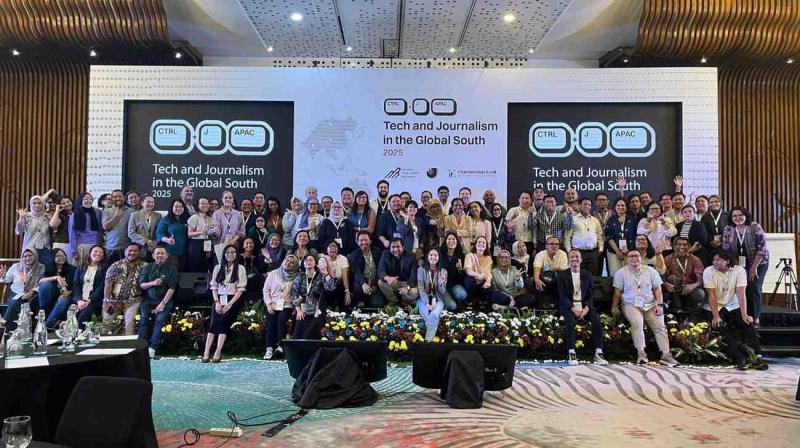
JAKARTA, 22 July 2025 – The Indonesian Cyber Media Association (AMSI), the Alliance of Independent Journalists (AJI), and the International Fund for Public Interest Media (IFPIM) are currently convening the regional conference CTRL+J APAC 2025. This three-day event, held on 22–24 July 2025 at Le Meridien Hotel, Jakarta, aims to strengthen cross-country collaboration across Asia-Pacific in shaping standards for quality journalism in the era of Artificial Intelligence (AI). The conference brings together journalists, media practitioners, academics, and technology platforms.
CTRL+J APAC 2025 was officially opened by the Vice Minister of Communication and Digital Affairs of the Republic of Indonesia, Nezar Patria, who delivered the keynote speech. In his remarks, Nezar expressed optimism about the potential of AI in journalism. “AI can simplify various journalistic tasks—from data analysis to content production—which can lead to faster operations,” he stated.
However, Nezar also warned that the advancement of AI must be balanced with accountability mechanisms, given its potential to produce misinformation. “AI can accelerate the creation and distribution of false or misleading information,” he said. Therefore, Nezar urged media organizations to adapt their business models in response to AI-driven disruptions and to understand shifting reader consumption patterns. He also emphasized the importance of fair compensation for journalistic work: “In a landscape increasingly influenced by AI, ensuring that journalists receive fair compensation for their work is a critical issue.”
In the opening panel discussion, Michael Markovitz, Head of the GIBS Media Leadership Think Tank from South Africa, addressed the financial challenges faced by independent media. He noted that journalism is a vital public good but still lacks sufficient funding infrastructure. “Stakeholders from both media and tech companies must come together to create the best economic ecosystem to help the media industry survive digital disruption. This is crucial because journalism is a public good—just like food or water—and yet it is not supported by proper infrastructure or ecosystem,” he said.
From a regulatory standpoint, Maia Fortes, Executive Director of Associação de Jornalismo Digital (AJOR), Brazil, stressed the need for inclusive journalism approaches. “AI must be regulated in ways that strengthen the digital journalism ecosystem, which is essential for protecting our fragile democracy,” she said.
Maia shared that Brazil is working to implement ideal principles of cooperation between tech companies and journalism, with an emphasis on media pluralism, diversity, and the need for public policy. For this reason, her organization collaborates with digital rights groups and organizations focused on the intersection of AI and journalism in Brazil.
Meanwhile, AMSI Chairperson Wahyu Dhyatmika called for greater collaboration among Global South countries to strengthen the bargaining power of local media. According to Wahyu, local media companies currently lack equal leverage when dealing with major tech giants like Google, Meta, and others. “Policymakers must therefore establish strong regulations to protect the interests of local media companies in their interactions with tech platforms,” he said.
Wahyu also emphasized the importance of solidarity among Global South stakeholders, as there is a significant imbalance in power between them and global tech players. “Media actors in the Global South must unite to learn from effective policymaking practices in other countries,” Wahyu stated.
He stressed the need for sustainable funding support from multi-stakeholder groups that are committed to media independence and high-quality journalism—especially amid the challenges posed by AI technologies.
During the conference, the Center for Media Regulation Monitoring (PR2MEDIA) presented a Feasibility Study on a Journalism Fund for Indonesia, which was officially handed over to the Indonesian Press Council. Vice Minister Nezar Patria attended the handover ceremony in person.
Masduki from PR2MEDIA highlighted the precarious position of local media outlets in Indonesia due to limited journalism funding. “We urgently need to establish a public journalism endowment fund supported by regulation. However, policymaking in Indonesia tends to be a very slow process,” he said.
Masduki also cautioned that state budget allocations for public media funding carry risks. He emphasized the importance of developing strategic mechanisms to ensure media independence from government interference. Member of the Press Council, Dahlan Dahi, accepted the study and pledged to follow up on its recommendations.
This is the press release for Day 1 of the conference. For further inquiries, please contact:
sarahervina@amsi.or.id and naharin@ajiindonesia.or.id.


- 117 kali dilihat